 English
 Català
 Español
Integral Reception
At CEHDA, we defend the rights of all people equally. That is why we work to provide reception, support and training for migrant people in Catalonia.
We do this by accompanying newly arrived people throughout their arrival and settlement process, making available to them: a place to live, access to public transport, workshops to get to know the local environment, Catalan language learning and spaces for socialisation through cultural outings.
We carry out labour integration activities for migrant people, with a particular focus on agroecological training, in collaboration with organisations such as Conreu Sereny.
We offer free immigration law advice.
We work to raise awareness in Catalan society about the right to migrate and the need to incorporate perspectives from the Global South.
We raise awareness of the reality of Ghanaian people and people from other African, Asian and Latin American countries living in Catalonia, creating spaces where they can share their migration experiences.
We work with educational communities to generate a shift towards anti-racist awareness through the participation of people from diverse backgrounds as educational role models.
We create meeting spaces between young people from diverse backgrounds, organisations and public administrations to address the challenges of social inclusion and intercultural coexistence.


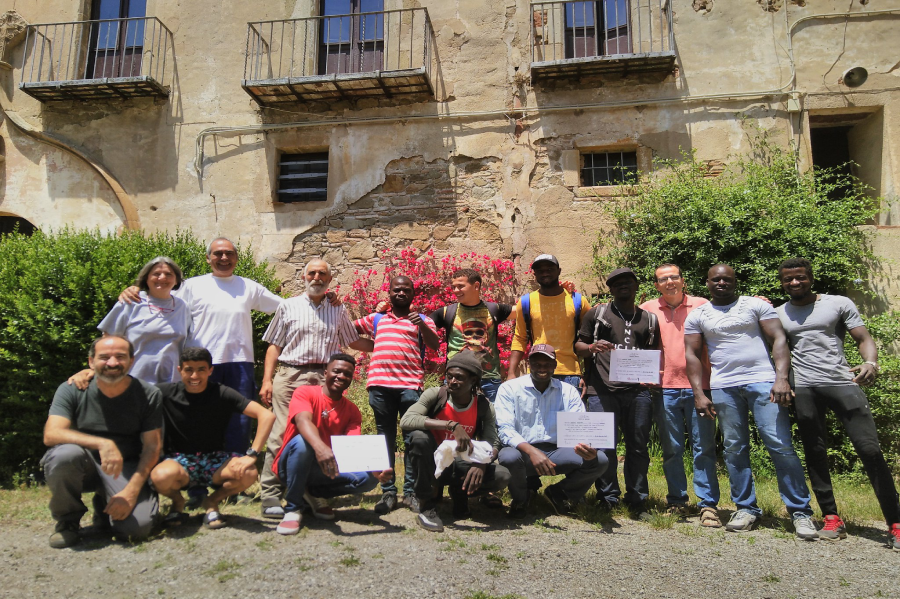
PROJECT: PLANTING THE SEED
Planting the Seed is a reception, advice and training project aimed at migrant people in situations of social and administrative vulnerability. The project was created with the aim of offering spaces of stability, support and learning that foster processes of social inclusion and personal autonomy, with special attention to the difficulties arising from irregular administrative status, lack of social networks and barriers to accessing basic rights.
Through a comprehensive approach, the project combines residential resources, legal advice on immigration, pre-employment training, language support, and community and awareness-raising activities. The different actions seek to strengthen the capacities and skills of the participants, promote their active participation in the community, and create spaces for coexistence, mutual support and the building of social bonds.
Introduction to ecological horticulture course
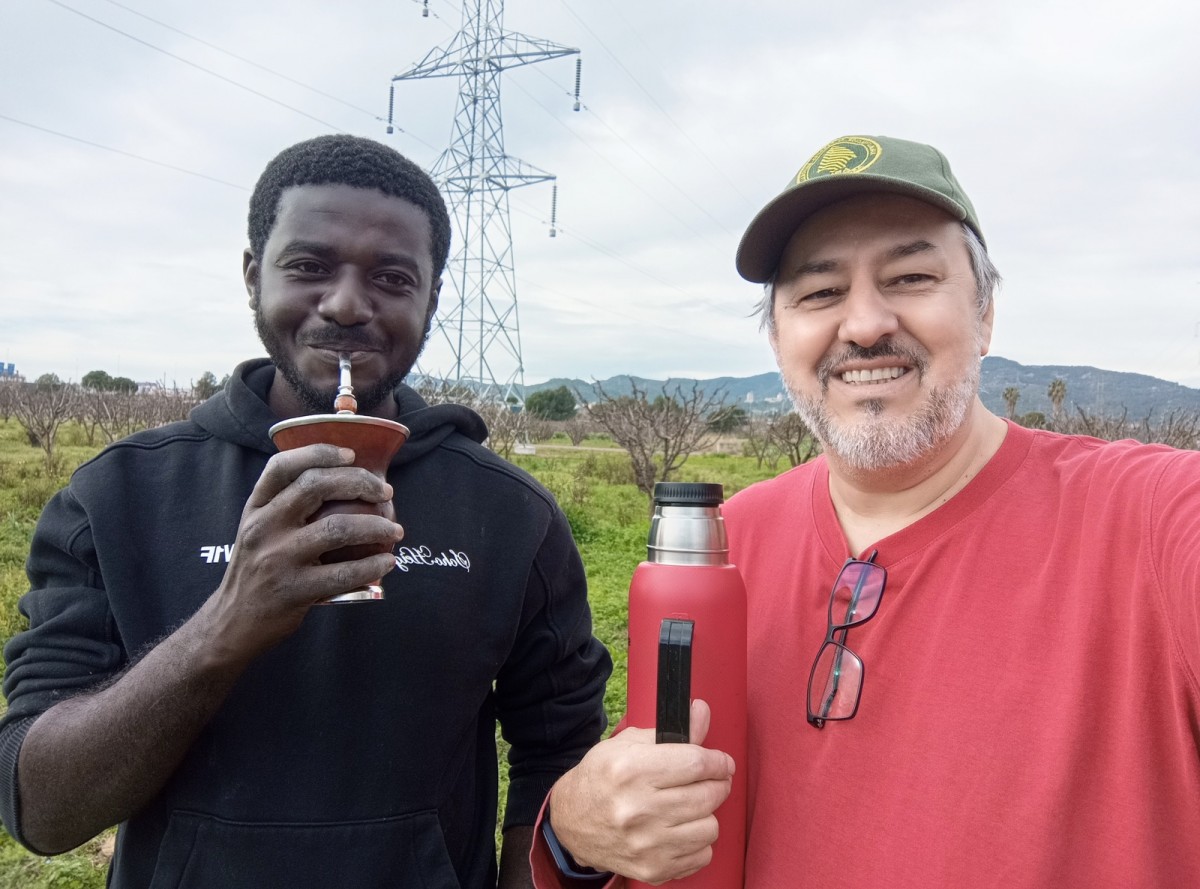
The introduction to ecological horticulture course is one of the main training lines of the Planting the Seed project. It is designed to provide basic pre-employment training tools for migrant people in situations of social and administrative vulnerability. This training is carried out in collaboration with the agroecological cooperative Conreu Sereny and takes place in a real agricultural setting in Sant Jeroni de la Murtra, Badalona, allowing theoretical and practical content to be combined from an applied and experiential perspective.
The course is mainly aimed at people with migration backgrounds linked to rural or agricultural environments who often face difficulties accessing formal training or labour integration processes. The training proposal is conceived not only as a space for technical learning, but also as an opportunity to recognise previous knowledge and strengthen the self-esteem and personal capacities of the participants.
The content covered includes key aspects of ecological horticulture such as soil preparation and management, composting, irrigation systems, crop planning, ecological pest and disease control, as well as the knowledge and use of agricultural tools and machinery. Concepts related to environmental sustainability, local agriculture and the territory’s own production cycles are also introduced.
The methodology combines theoretical explanations with direct practical work in the vegetable garden, promoting participatory learning adapted to the different rhythms and levels of the participants.
Beyond the technical skills acquired, the course also becomes a space for socialisation, stability and the building of bonds, contributing to the participants’ social and labour inclusion pathways.
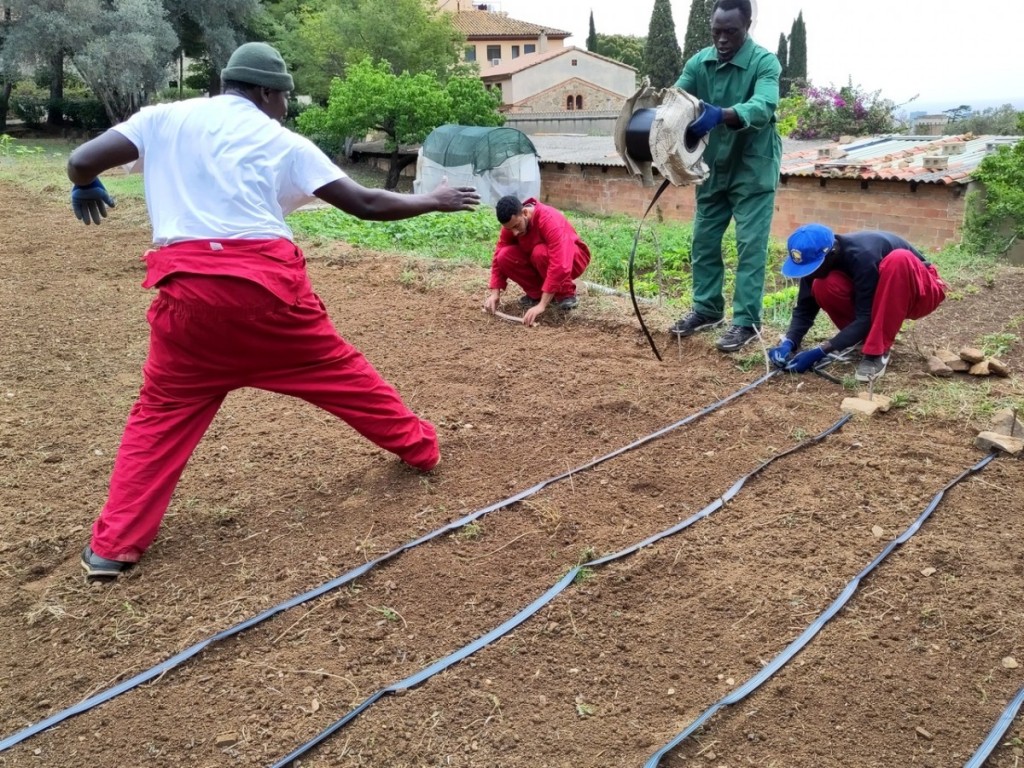
Practical support in the organisation’s agricultural space
The project has its own agricultural space in Sant Vicenç dels Horts, which functions as a practical learning environment and a place to consolidate work habits. People linked to the residential reception resources can take part on an ongoing basis in training activities related to horticultural work and the maintenance of the agricultural space.
This space makes it possible to work on specific technical skills linked to the entire agricultural production cycle, from preparing the land to harvesting and seed conservation.
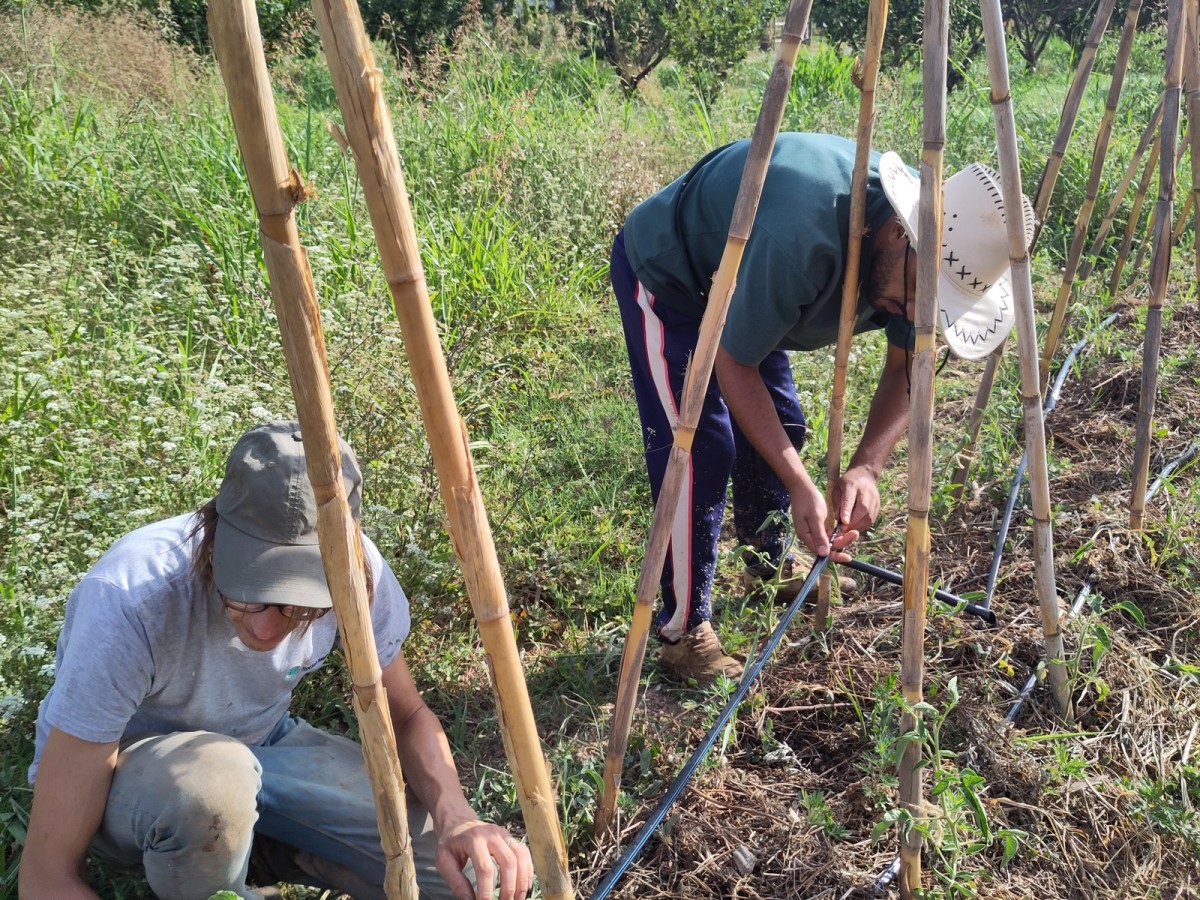
The activities carried out include setting up support structures for crops such as tomato plants, plant tutoring and maintenance tasks, the full cultivation cycle of calçots —including planting, earthing up and harvesting—, as well as the sowing and care of other horticultural species such as cabbages, leeks, peppers, pumpkins and aubergines.
Learning is also developed around the installation and maintenance of drip irrigation systems, the safe use of agricultural machinery such as brush cutters, and basic techniques for seed conservation and ecological crop management.
This space is especially valuable because it offers sustained practical experience over time, helping to consolidate routines, responsibilities and cross-cutting skills related to teamwork, organisation and personal autonomy.
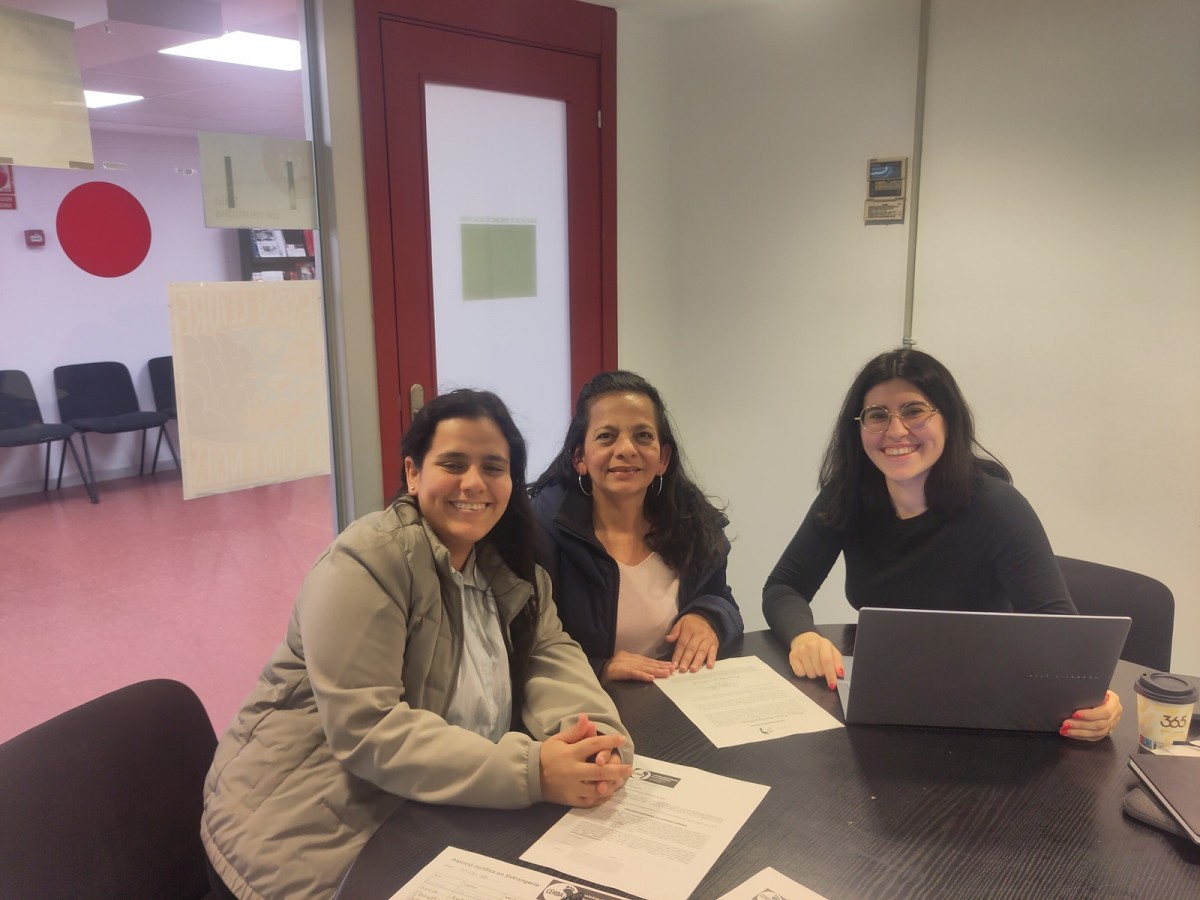
Legal advice on immigration
Legal support in immigration matters is a central part of the project, as many of the participants face complex administrative situations that directly affect their ability to access work, training or housing.
The project offers individual specialised legal advice sessions to guide and support administrative regularisation processes, renewals of residence and work permits, appeals against refusals and other procedures related to immigration law.
This support is provided both to people hosted in the residential resources and to people referred by other social organisations and municipal services.
The actions include social, socio-labour and training-based regularisation processes, preparation of administrative documentation, reports on means of living, obtaining and legalising criminal record certificates from countries of origin, as well as support in dealing with different public administrations.
At the same time, group immigration workshops are also organised with the aim of making legal information accessible and collective. These sessions explain the different pathways to regularisation, legal updates and the most common administrative procedures, while also creating spaces to answer questions and share experiences.
This service aims to ensure that migrant people have clear information and appropriate support to exercise their rights and move forward in their social and labour inclusion processes.
Residential reception and coverage of basic needs
The project has residential resources for migrant people in an irregular administrative situation or in contexts of high social vulnerability. These spaces offer an environment of stabilisation and support that makes it possible to begin social and labour inclusion processes in dignified conditions.
The reception resources are designed to respond to diverse situations, including homelessness, substandard housing or lack of social and family networks. In addition to accommodation, the project covers basic needs such as food, hygiene and cleaning products, clothing and footwear, basic supplies and transport support.
At the same time, individual follow-up tutoring is carried out to work on personal, social and employment objectives adapted to each situation. Participants receive ongoing support in aspects related to coexistence, access to social resources, administrative regularisation, training and job search.
This comprehensive intervention model makes it possible to create spaces of trust and sustain processes that often require time, stability and close, continuous support.
Local environment workshops
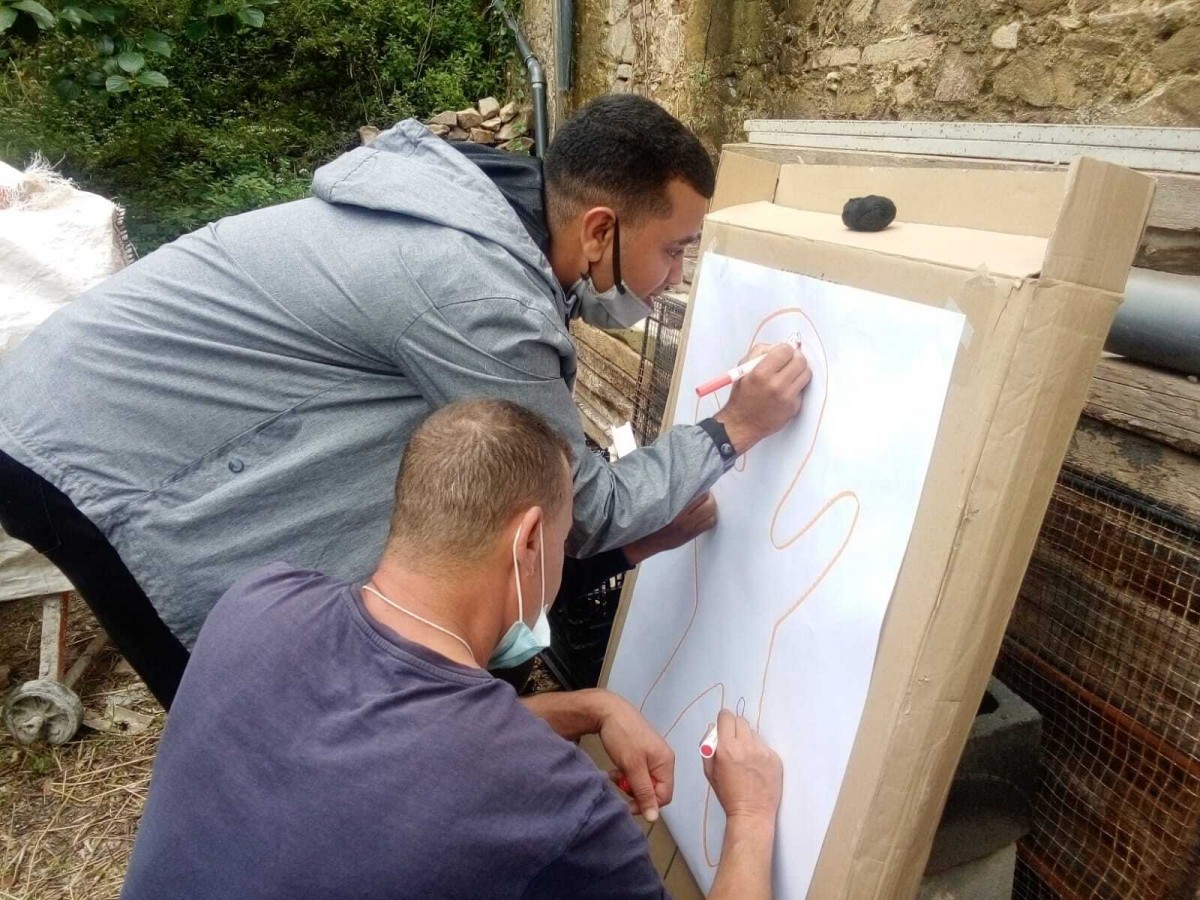
The local environment workshops aim to provide basic tools so that participants can learn about their rights and duties as citizens and manage their everyday lives with greater autonomy.
These spaces address aspects related to how public services work, the healthcare system, social resources, labour rights, citizen participation channels and general knowledge of the social and administrative context of the territory.
The sessions are held in a participatory format and seek to create spaces of trust where people can share questions and experiences. Many participants arrive after complex migration journeys and often do not know the administrative circuits or available resources, which can increase their vulnerability.
Academic and language support and conversation spaces
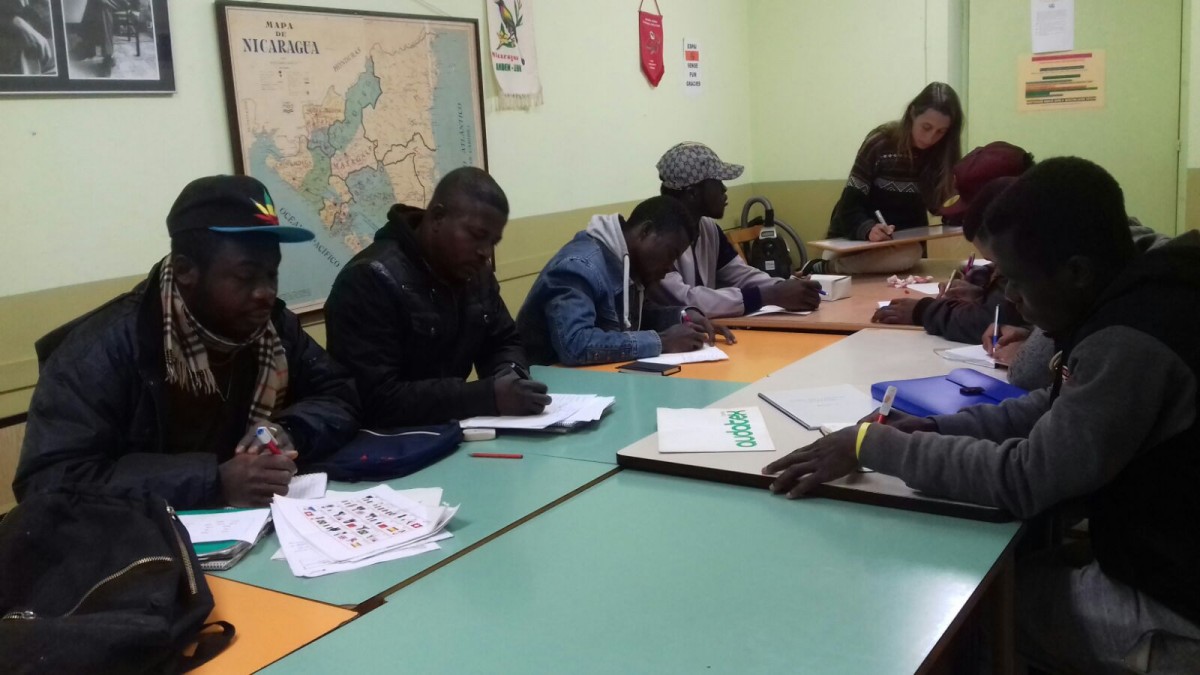
The project offers academic reinforcement and educational support spaces mainly aimed at people who are learning Catalan and Spanish or who are undertaking post-compulsory studies. This support seeks to facilitate access to language learning and reduce educational difficulties resulting from complex migration paths, interrupted schooling, or administrative and social barriers.
Support is provided in a flexible way and adapted to each person’s needs, combining individual accompaniment with collective learning spaces. Within this framework, Catalan conversation spaces are also promoted to improve oral language practice in an accessible and welcoming environment, while also fostering confidence and active participation among participants.
Language learning is a key element in promoting everyday autonomy, access to training, job search and community participation. For this reason, the project understands language support not only as an educational tool, but also as a fundamental factor for social inclusion and the building of community bonds.
This set of activities helps strengthen the basic skills needed to participate actively in society and support processes of personal autonomy.
Natural and cultural environment outings
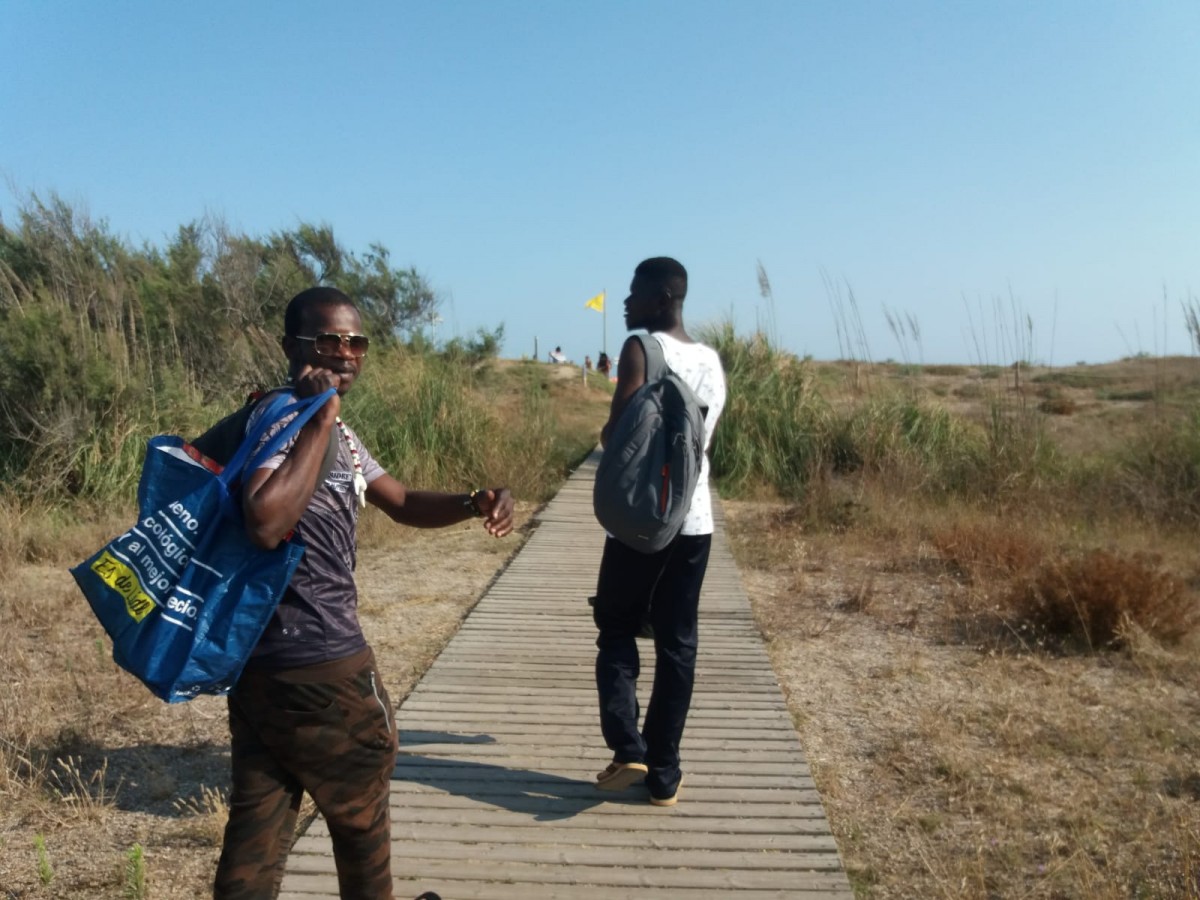
Natural and cultural environment outings are activities aimed at fostering community participation, emotional wellbeing and the creation of bonds between people from different sociocultural backgrounds. Through these activities, spaces for encounter and coexistence are promoted, allowing participants to share experiences, build trusting relationships and strengthen their sense of belonging to the territory.
The outings include visits to natural spaces and cultural activities in the area, and are conceived as an opportunity for participants to get to know the social and cultural environment in which they live. At the same time, these experiences facilitate contact between people with diverse life paths, encouraging cultural exchange and coexistence from a perspective of mutual respect and shared learning.
These activities also play an important role in reducing situations of social isolation and in promoting accessible leisure spaces for people who often have few opportunities for cultural and community participation.
Awareness-raising talks and activities in educational centres
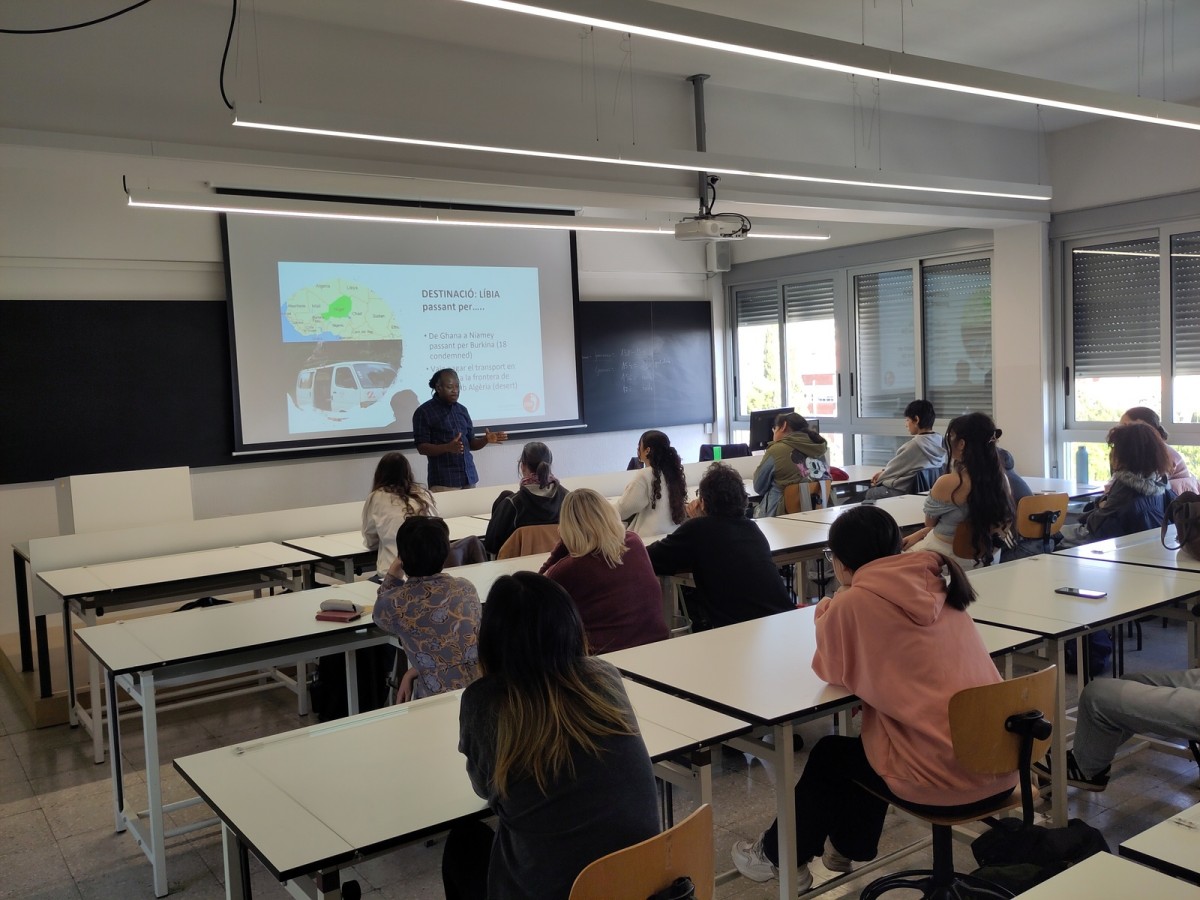
The project promotes awareness-raising talks and activities aimed at primary schools, secondary schools and other educational spaces, with the goal of bringing young people closer to the reality of migration and encouraging a critical and committed perspective on global inequalities, borders and human rights.
These sessions are based especially on the direct experience of migrant people linked to the project, many of them from different countries on the African continent, who share their migration journey and the difficulties experienced during the process of migrating and arriving in the territory.
Through first-person testimony, spaces for reflection and dialogue are created with students around the causes of migration, existing imaginaries and stereotypes, situations of discrimination and racism, as well as the challenges linked to social inclusion processes.
These activities seek to promote values of solidarity, coexistence and social justice, while helping to humanise migration experiences and combat stigmatising discourses about migrant people.
PROJECT: Growing Rights. Training and support for migrant people in an irregular administrative situation.
The project proposes a comprehensive intervention to address the vulnerability of migrant people in an irregular administrative situation. The initiative combines legal guidance, support with procedures, occupational training, access to housing and social awareness-raising, creating a personalised pathway that promotes fundamental rights and social inclusion.